
She had 1,696 games. We told her she had ten.
A player came back to chess after two years away, and three separate parts of this product decided she was not worth a sentence. None of them was wrong on its own terms.

Nine languages found four bugs in English
Eloist now writes to you in nine languages. Translating it turned up four defects that had nothing to do with translation, and had been shipping to English readers all along.
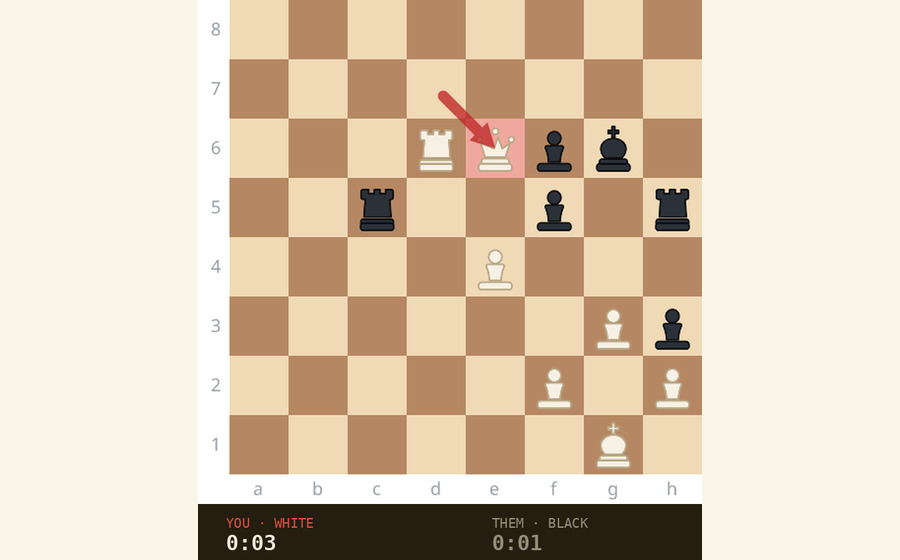
Viktor watched your week
Eloist now turns your recent games into a short coach video: your positions, your clocks, one honest lesson, and a mission for next week that he checks.

NaN went to press
Our daily chess paper printed “NaN contain no blunder at all, NaN%” on its front page. Nothing in the database was wrong. That is what made it interesting.
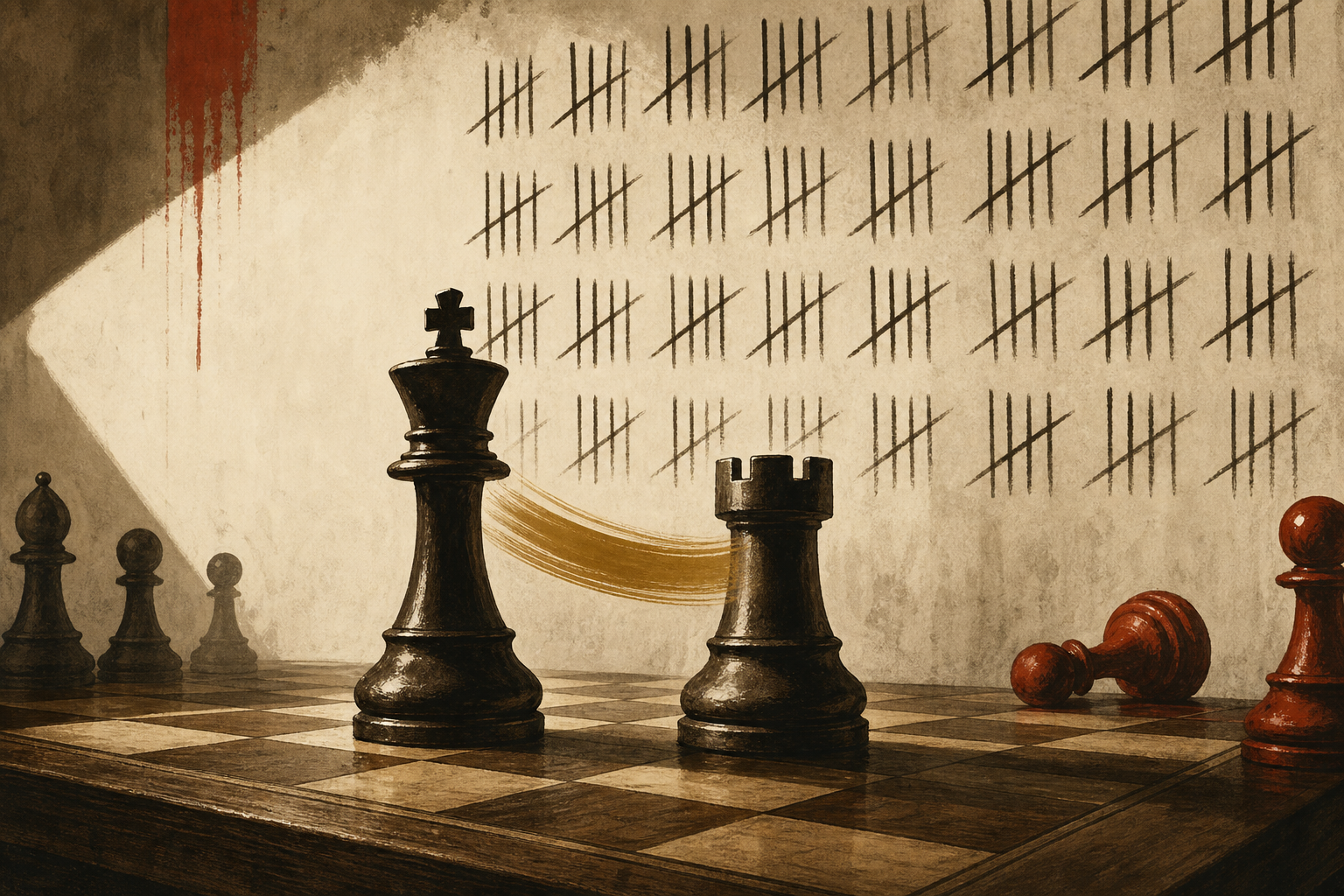
The most dangerous move in chess is castling. Sort of.
Count every worst move in 289,578 analysed games and one move tops the list by a mile: O-O. The explanation says more about how we write chess down than about castling.
We told one player the same thing 57 times
Our coaching emails had 2,906 different subject lines and five things to say. A confession, and what we built instead.
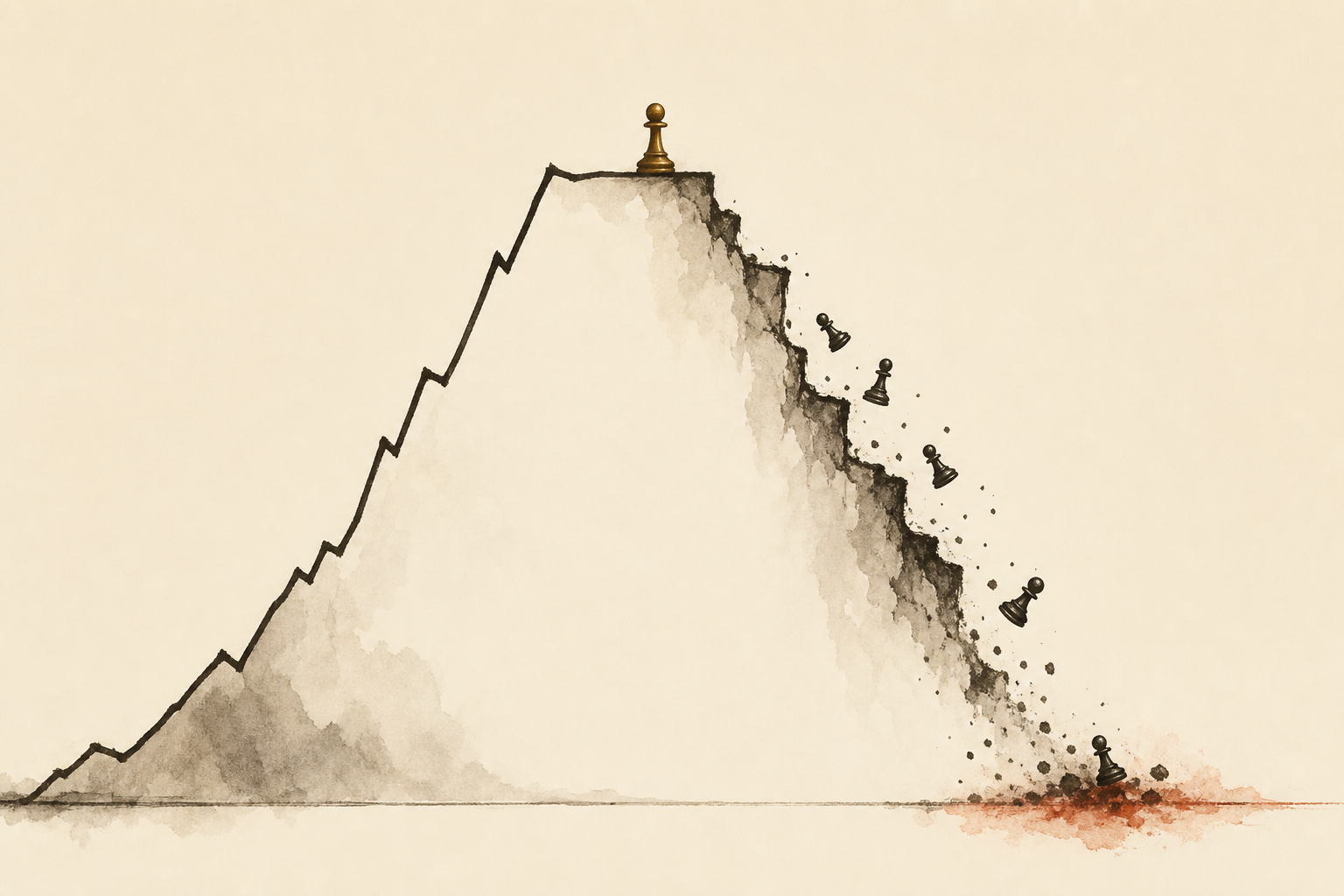
Getting winning is not the same as staying winning
For the typical club player, a quarter of clearly won positions end level or worse. We measured 274,626 of them to find out why the win leaks.
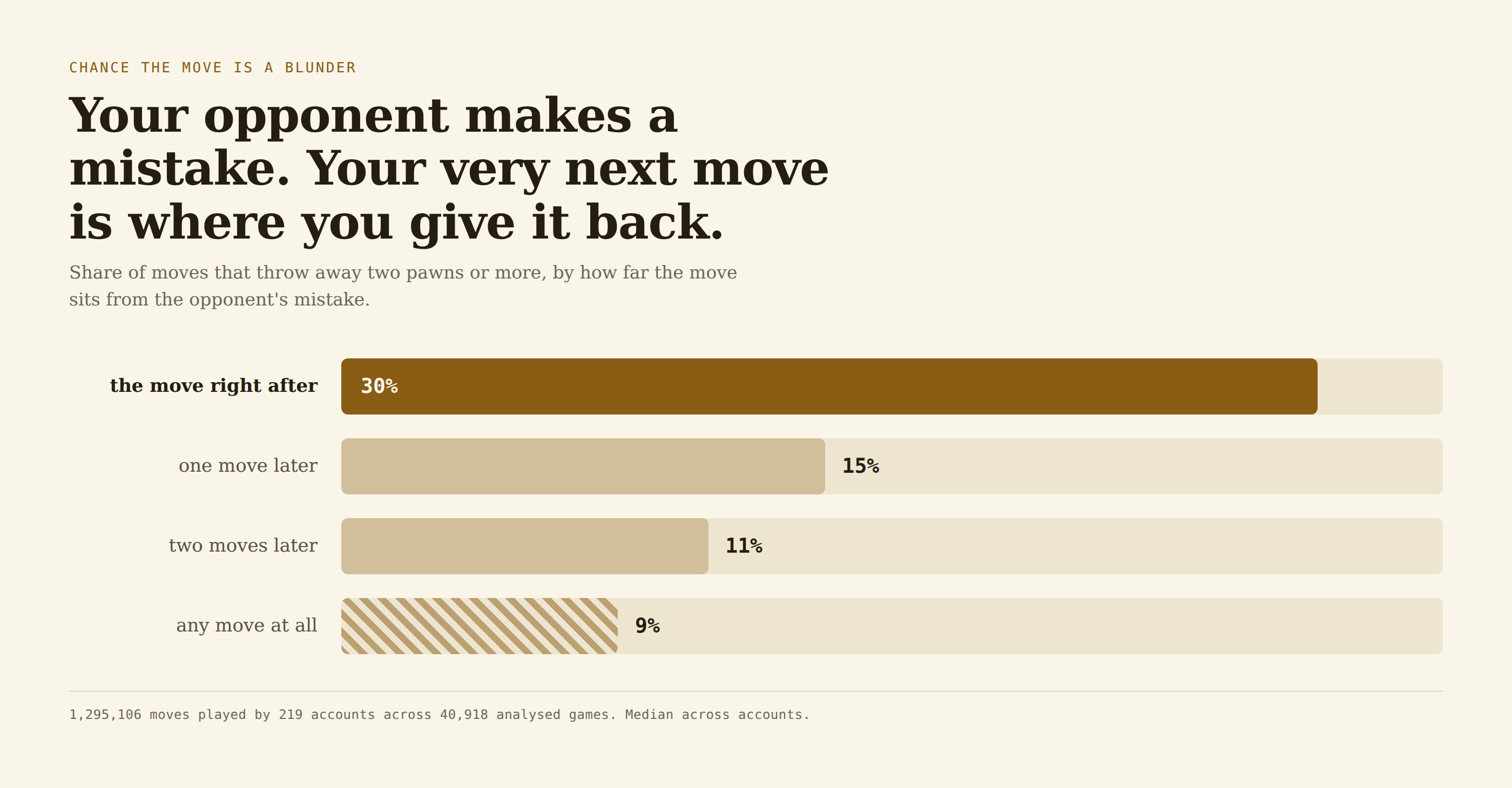
The move that costs you most
We went through more than a million moves looking for the single pattern that bleeds the most rating. It turned out to be the reply.
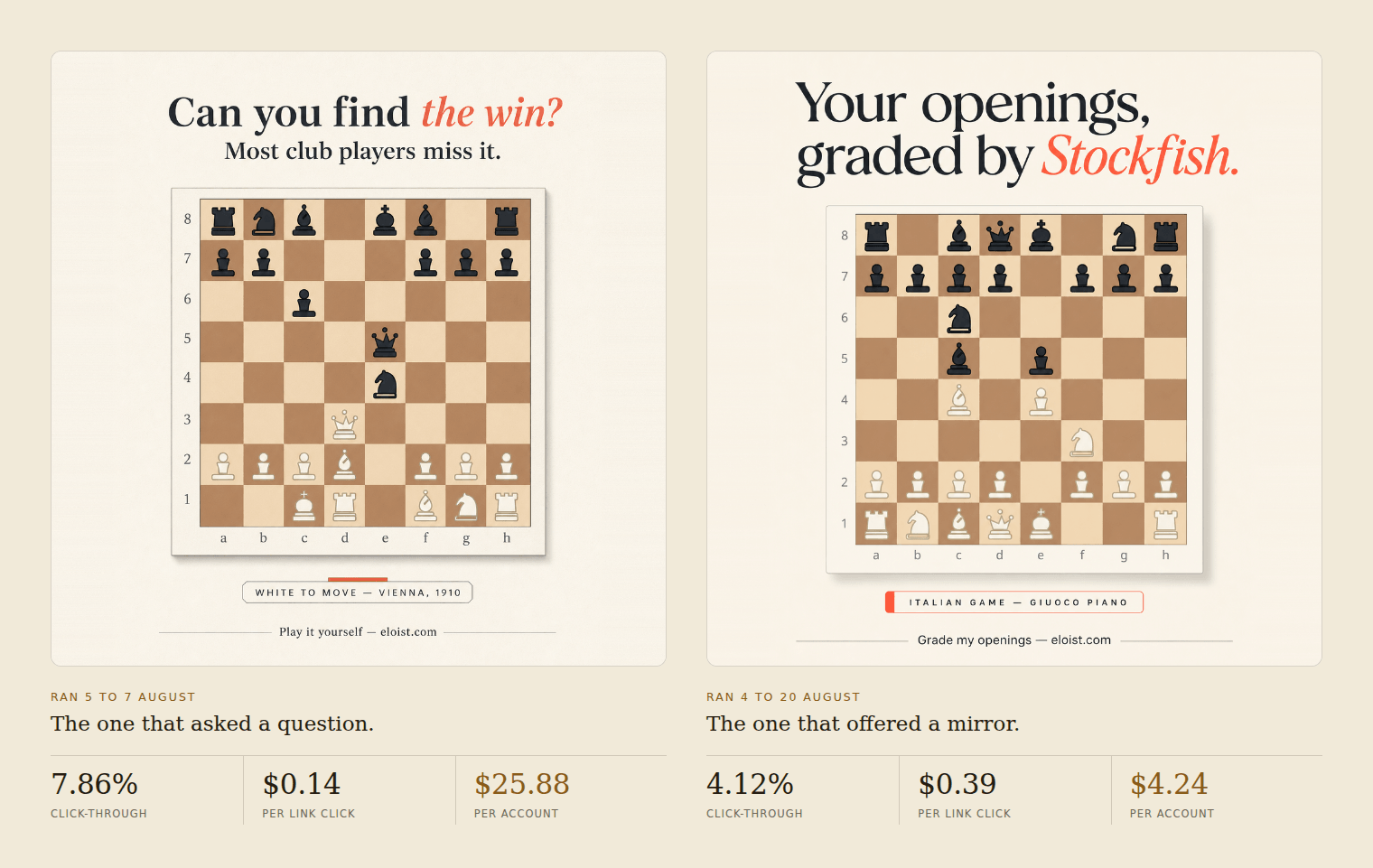
The cheapest clicks bought the most expensive players
One ad won every number we were watching. It cost six times more per player than the ad running beside it.
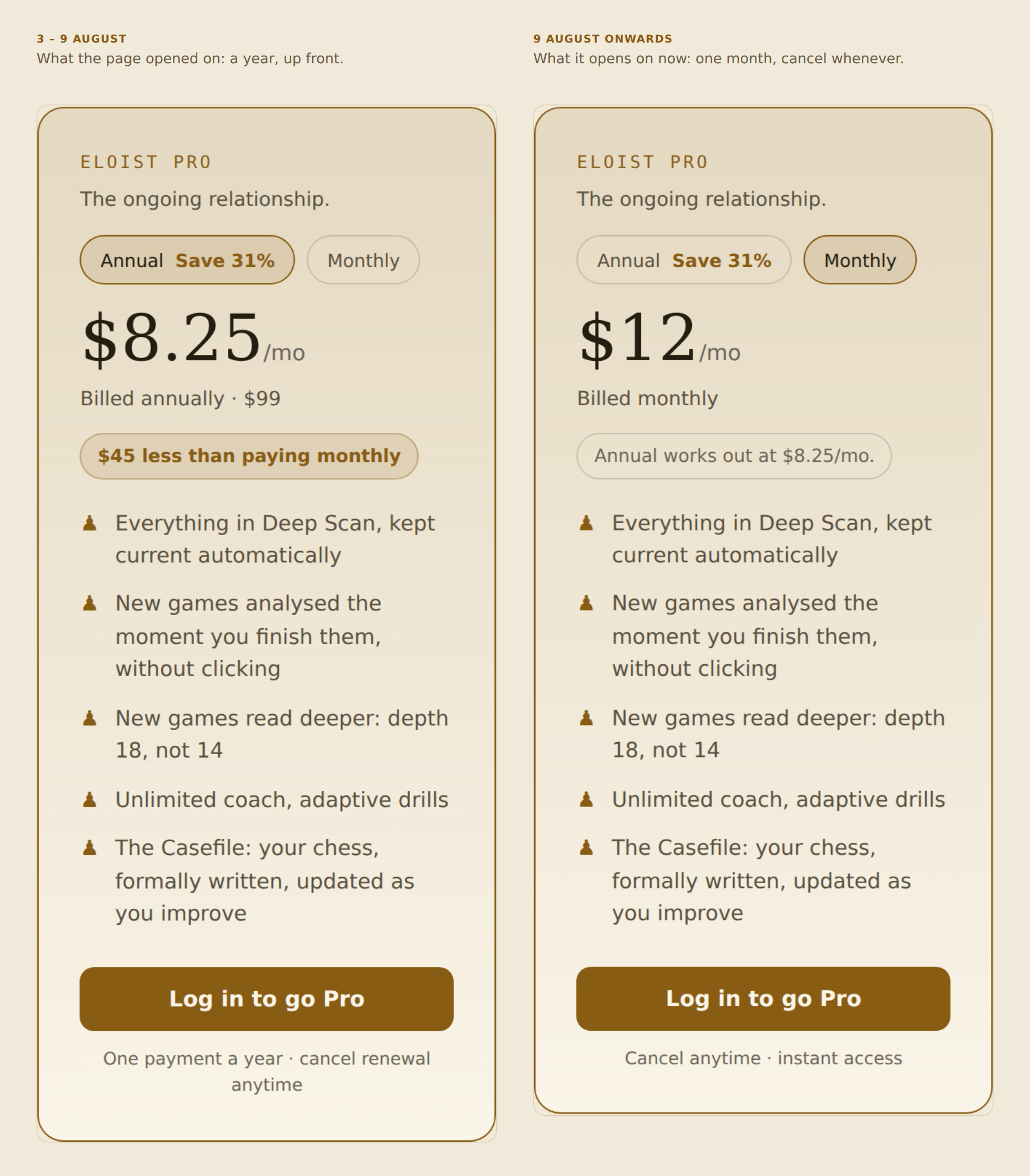
We were wrong about annual
For six days our pricing page asked you for a year up front. Here is what that cost, what we still cannot prove, and the worse mistake we made fixing it.
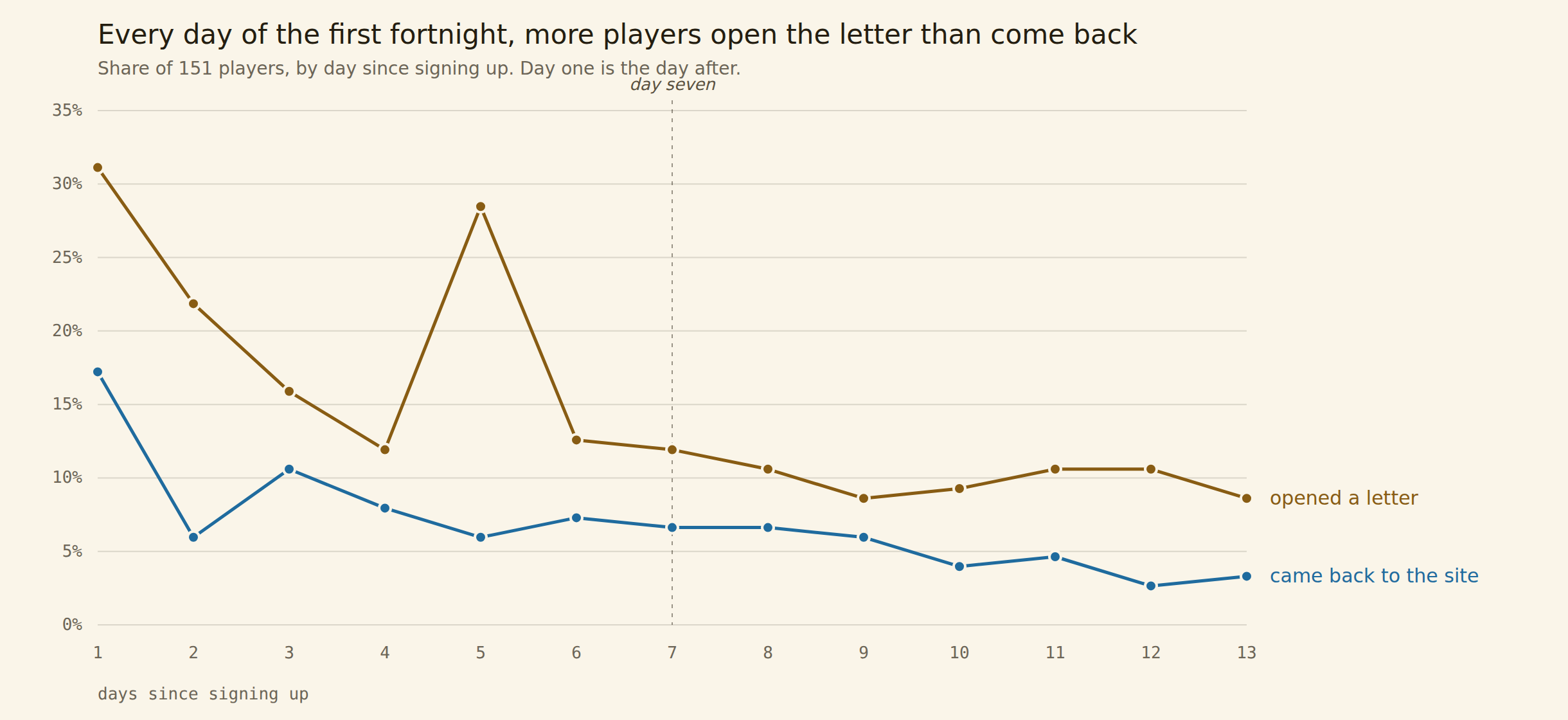
The return trip
Signing up takes one evening. Coming back is a separate decision, and most of the time it happens in an inbox.
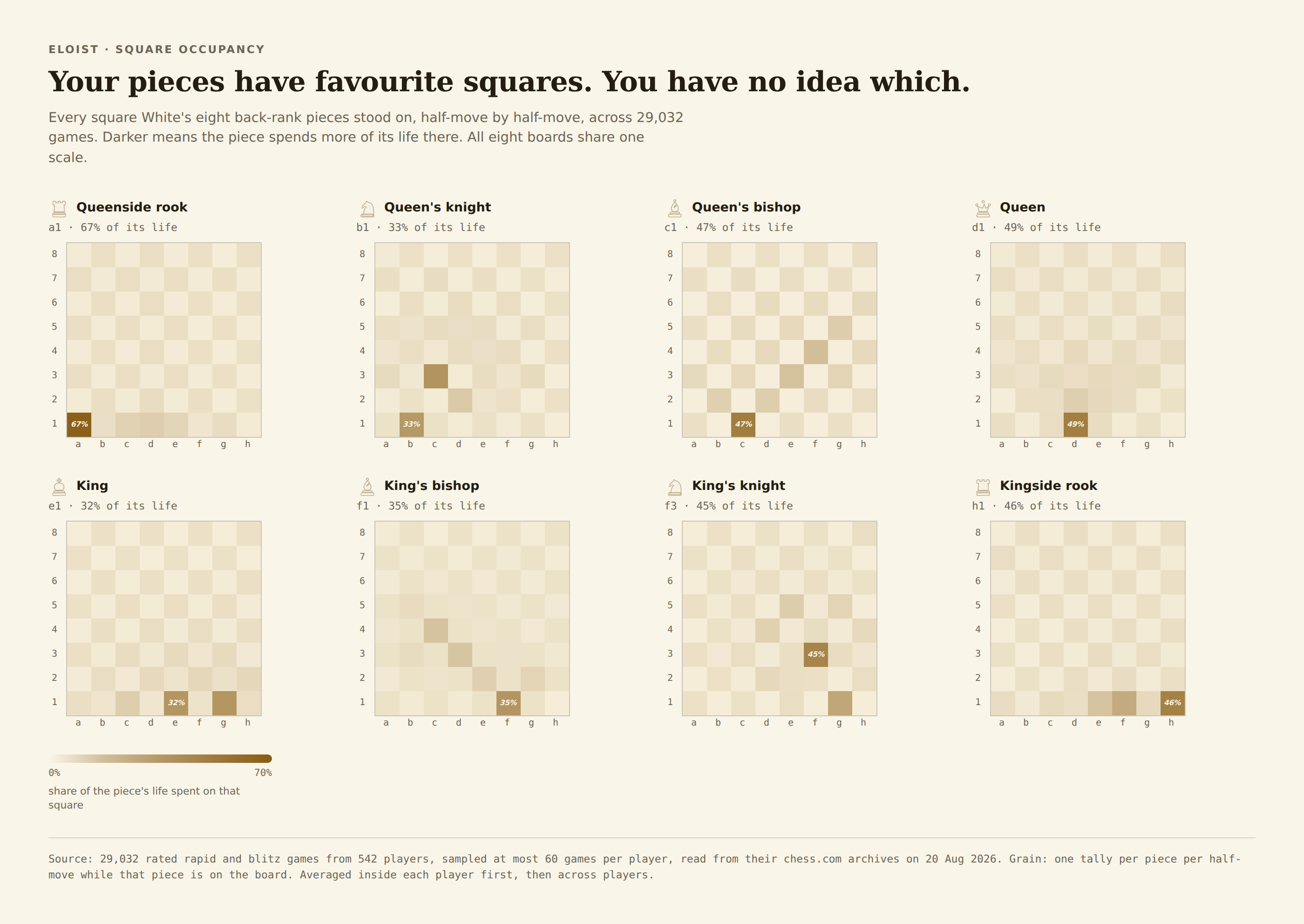
Where your pieces actually go
We replayed 29,032 games half-move by half-move and wrote down every square every piece stood on. Your knights live on two squares, and your queen's bishop barely gets out of bed.
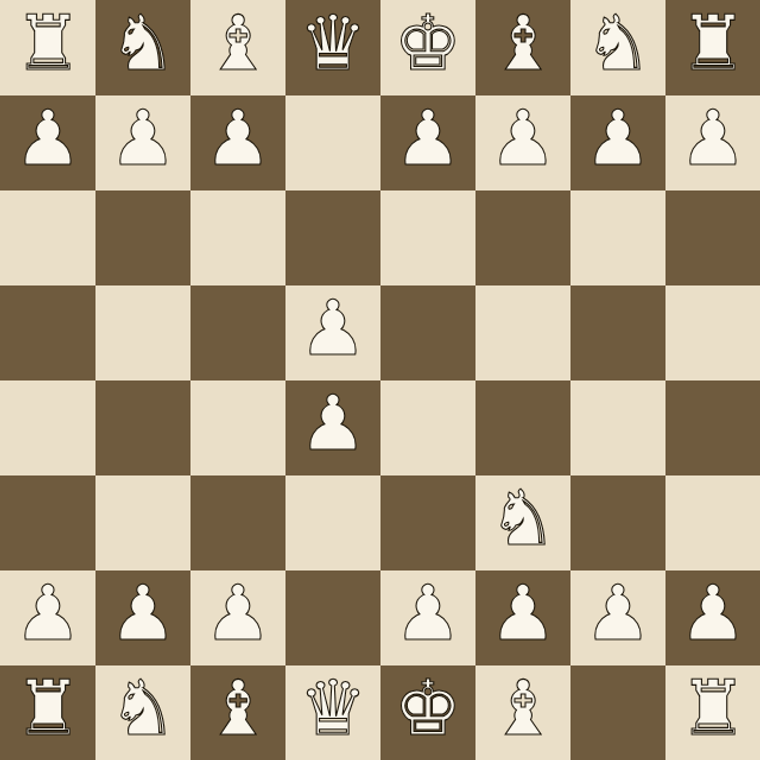
Both sides were white
The bug report was four words and a link. The fix was deployed at 09:43 UTC.
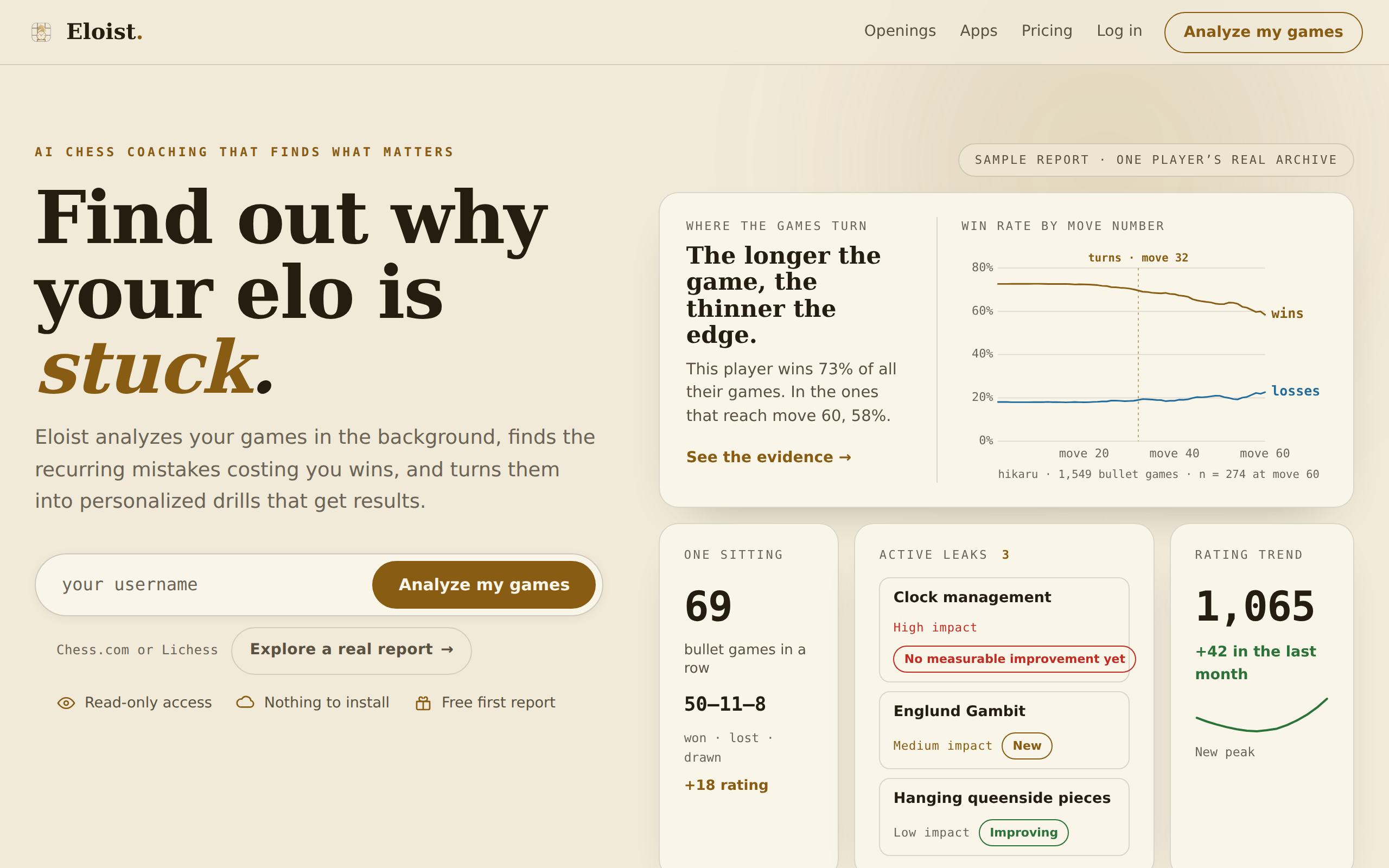
The hundred games before this one
Every chess tool reports on the game you click. What is taking your rating is spread across the hundreds you don't.
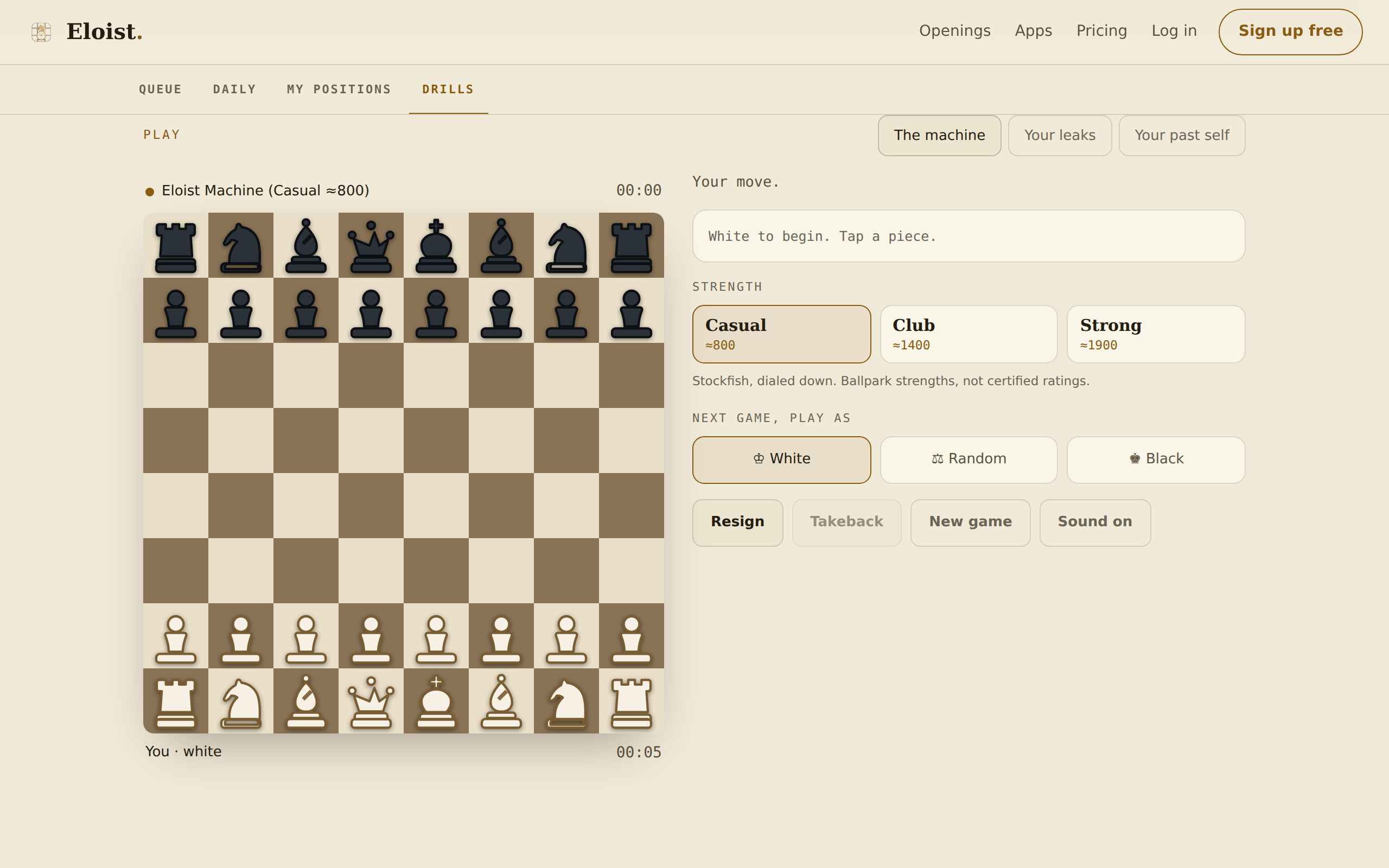
Play the machine
Chess, right here — pick a strength, pick a side, no account needed.
Your games, working for you while you sleep
Most tools analyze the games you click. Eloist reads your games without being asked — and mails you what it finds.
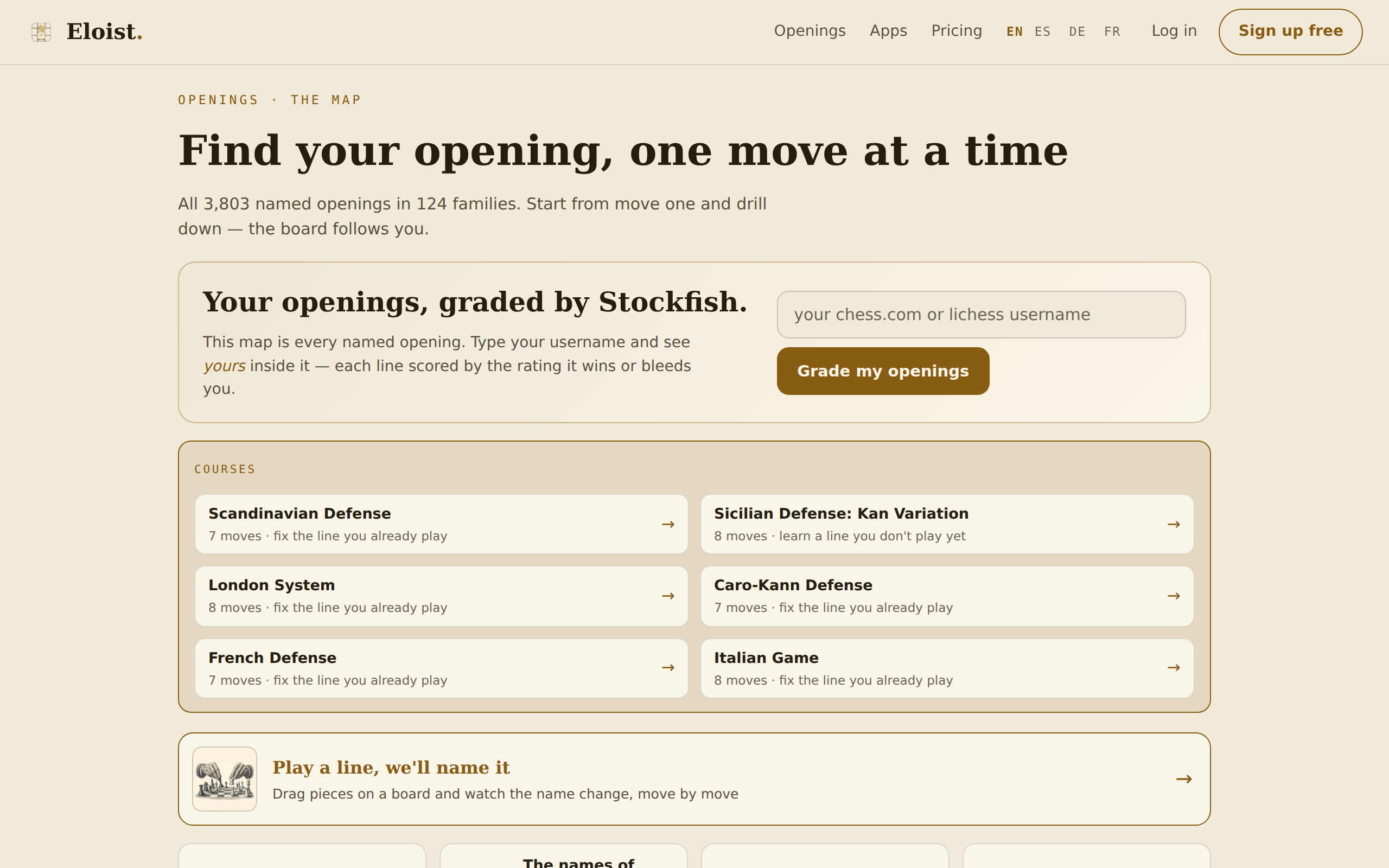
The opening shelf
A database you can live in, the stories behind the names, and a cheatsheet you can print.
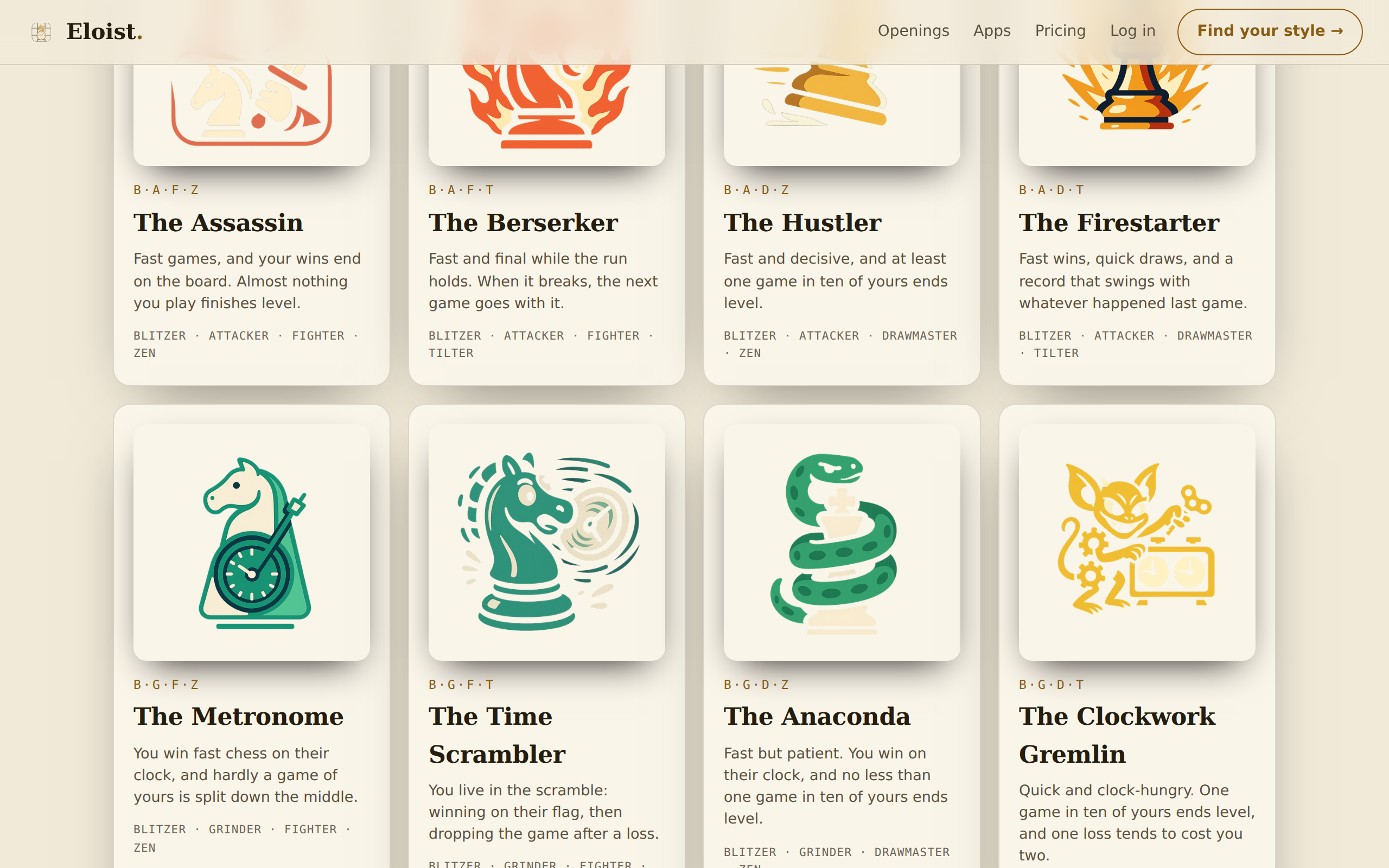
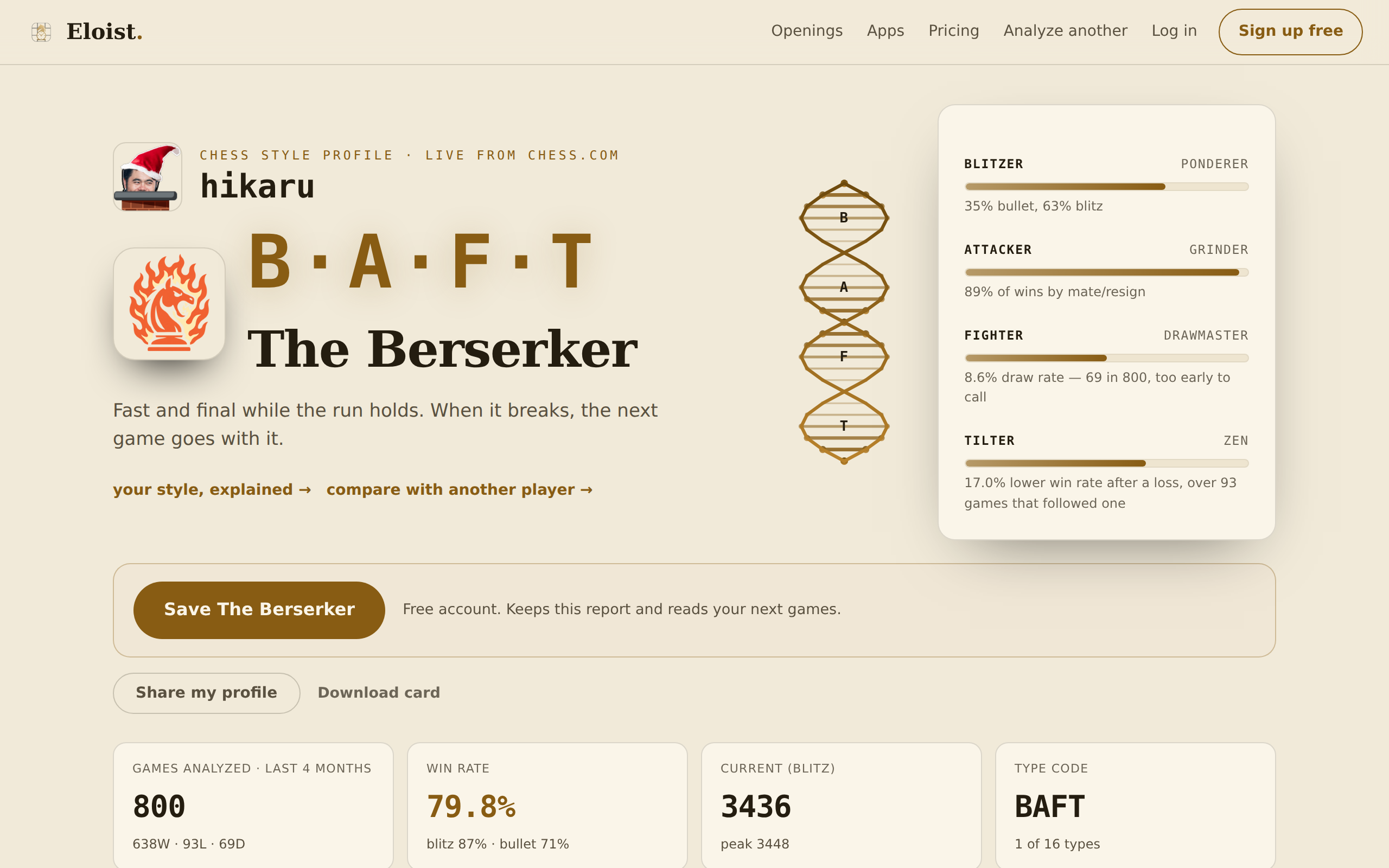
Which of the sixteen are you?
Every player has a style. Eloist reads yours from your real games — and gives it a name.
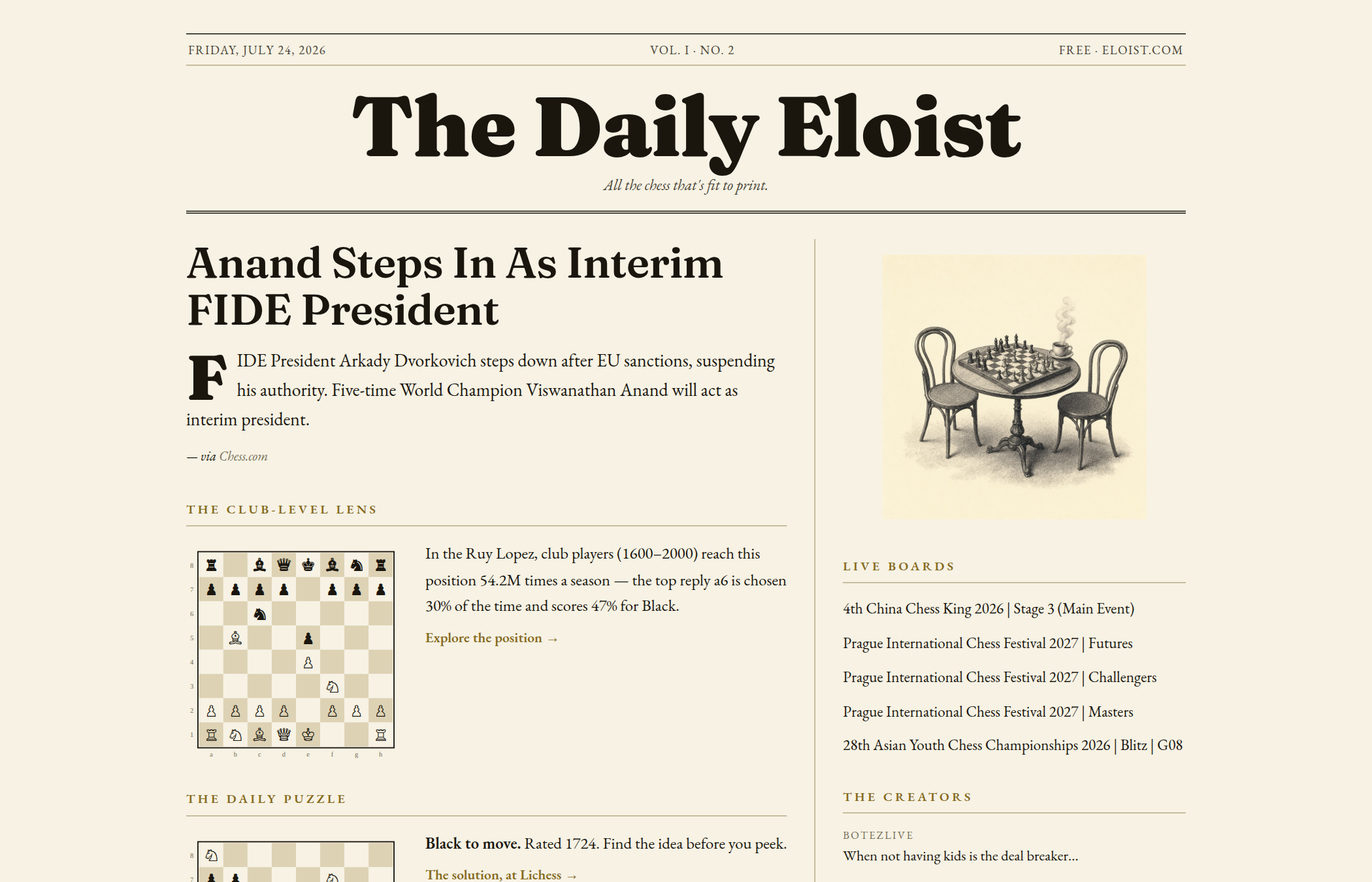
A chess paper, printed every morning
Game of the Day, Today in Chess History, the Daily Puzzle — set in ink, delivered if you want it.