The hundred games before this one
Every chess tool reports on the game you click. What is taking your rating is spread across the hundreds you don't.
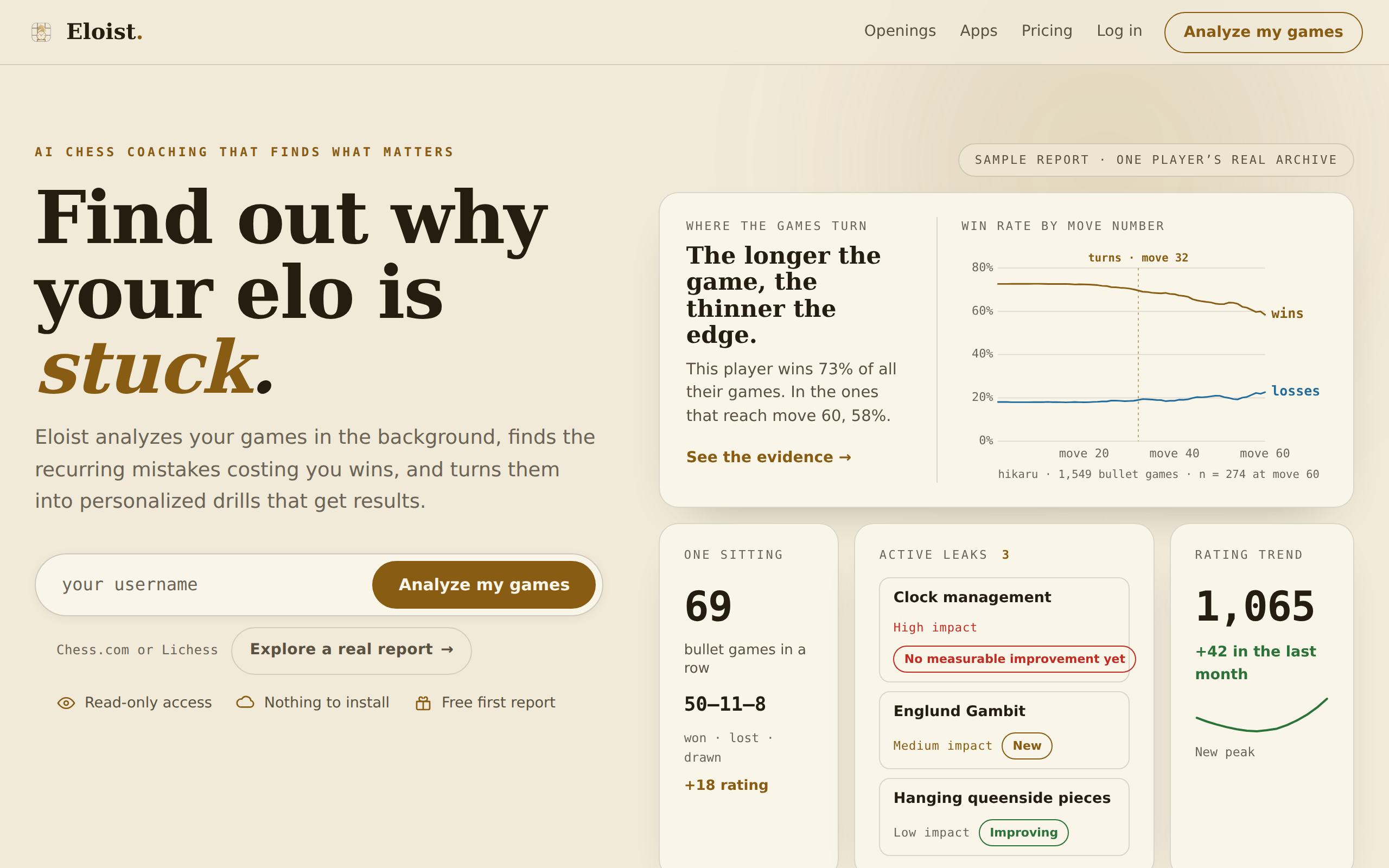
Most losses at fast time controls have the same shape. The position is fine, the clock is not, and somewhere past move 25 calculation stops and guessing starts. The engine report afterwards is accurate about that game: here is the move that threw it away, here is the evaluation swing. What it cannot see is that the same collapse ran through the hundred games before it, in the same kind of position, at about the same reading on the clock.
Almost every chess tool is built around that one report. You choose a game, it gets the full treatment, and the rest of your history sits where it was. That works when the mistake lives inside a single game. It does not work when the mistake is a habit: the same pawn push in the same structure, forty games apart.
The archive is already there
Nothing about the aggregate is hidden. Your games are stored, and every move in them carries the clock reading from the moment it was played, so the record of your time trouble has been sitting in your own history since the day you made it. The reason it goes unread is that reading it is slow, repetitive work, and a Review button hands that work to you. Eloist does the reading away from the screen, on a schedule, and reports what came out.
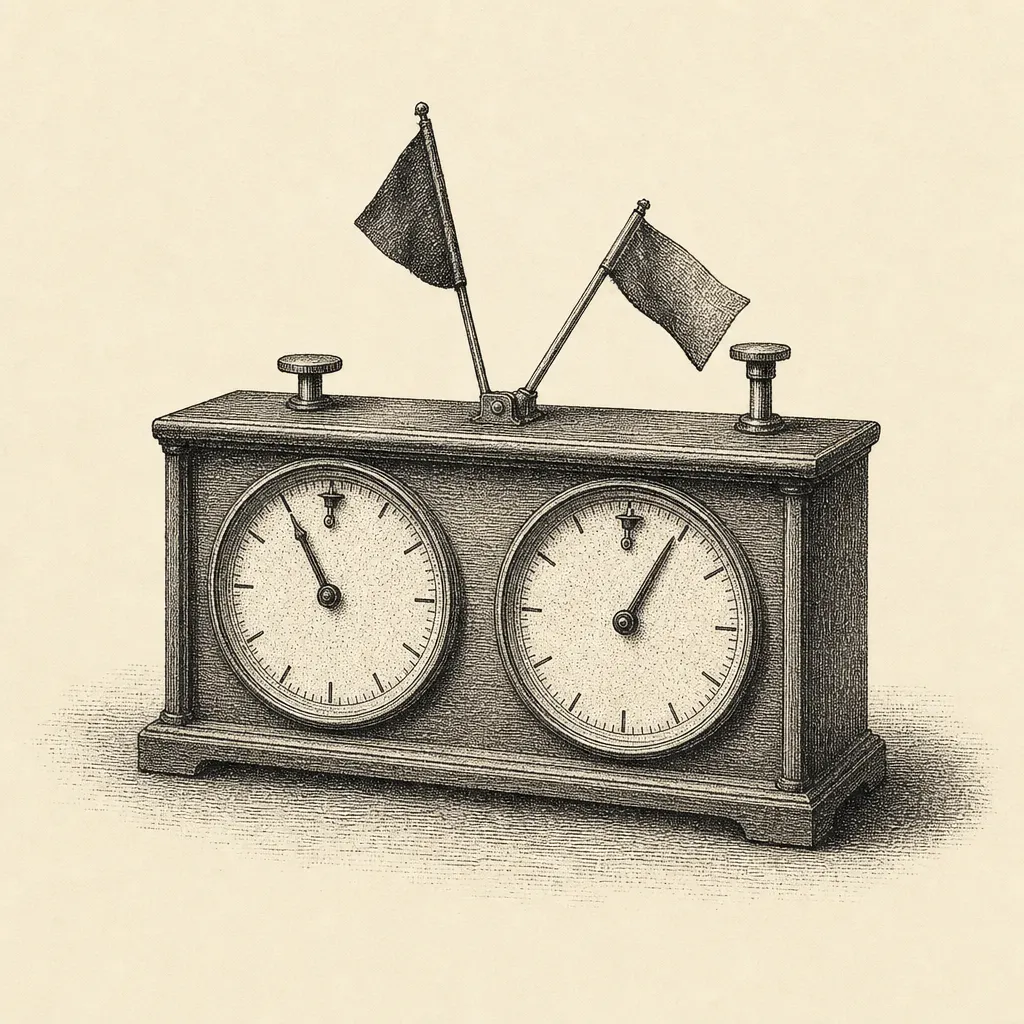
The clock is the part most tools throw away. Eloist keeps it: the seconds left on every move, the point where the two clocks split, and how far your average move time falls in the last third of a game. Bullet players get 1+0 and 1+1 reported separately rather than averaged together.
What comes back
Connect an account once and your archive gets read, then kept current as new games land. The Heist Ledger counts hung pieces across all of it in both directions: what you dropped, and what your opponents left on the board that you walked straight past. The Overnight Study sets you now against you a few months ago and reports what moved, including your pace and what a loss does to the game right after it. The Sunday Review lands in the inbox on Sunday morning with the games that decided the week's rating and one thing to work on before the next one. After a playing session, a digest follows with board diagrams of the wins that were there and went unplayed.
None of it needs you to open the site. The mail arrives because the pass over your games already ran, and the dashboard is waiting when you want the long version of what the mail summarized.
Where the reading goes next
The same reading shows up elsewhere. When one of your games leaves theory, that move links into the openings database at the line you left, with what club players play from there and the win–draw–loss record behind it. Your games stay exportable as PGN at any point, so connecting an account never puts your history anywhere you cannot get it back out of.
Why it reads all of it
Eloist was built because we wanted it for our own games and could not buy it anywhere. The judgment underneath is not a technical one. A club player who has butchered the same rook ending or lost the same time scramble a hundred times does not need a better report on game 101; they need the hundred counted, which is what the overnight pass does.
Everything in a report is read from your own record and nothing else. No league averages standing in for you, no advice written for somebody rated 400 points away. If the clock chart shows the same cliff in every 1+0 game you play, that is what comes back, and the first pass starts on the games already in your account.
Connect your account →