What shipped, in your Sunday Review
The Sunday Review now closes with what's new on Eloist that week — one line, linked titles, only on weeks something actually shipped.
The changelog →The bigger stories live on the blog.
The Sunday Review now closes with what's new on Eloist that week — one line, linked titles, only on weeks something actually shipped.
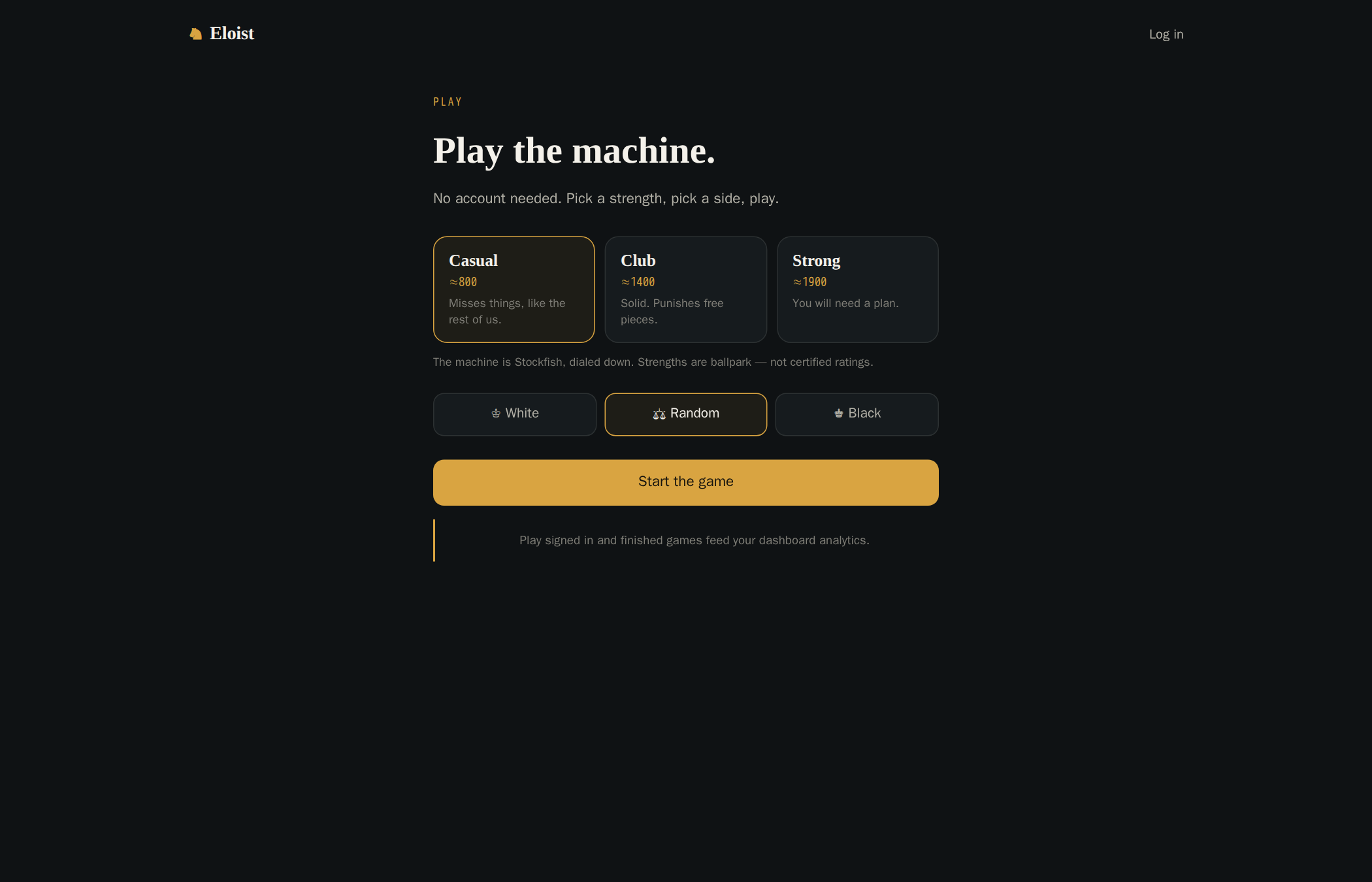
The changelog →Play the machine at three strengths — Casual, Club, and Strong — no account needed. Sign in first and every finished game flows straight into your analytics, like any other game you've played.
Play a game →Your week in chess, every Sunday morning: where your rating moved, the games that decided it, and the one thing to work on next week. Lands in your inbox.
Sign in to get it →Every piece you've hung and every piece you've been handed — your whole archive, both directions of the crime. Bullet players get the 1+0 versus 1+1 split.
Open the ledger →The claims on your dashboard now carry confidence ranges. When a win rate is built on eleven games, Eloist says so — and the methodology is public.
See the math →The whole app meets WCAG 2.1 AA — every theme, every board, keyboard and screen reader included.
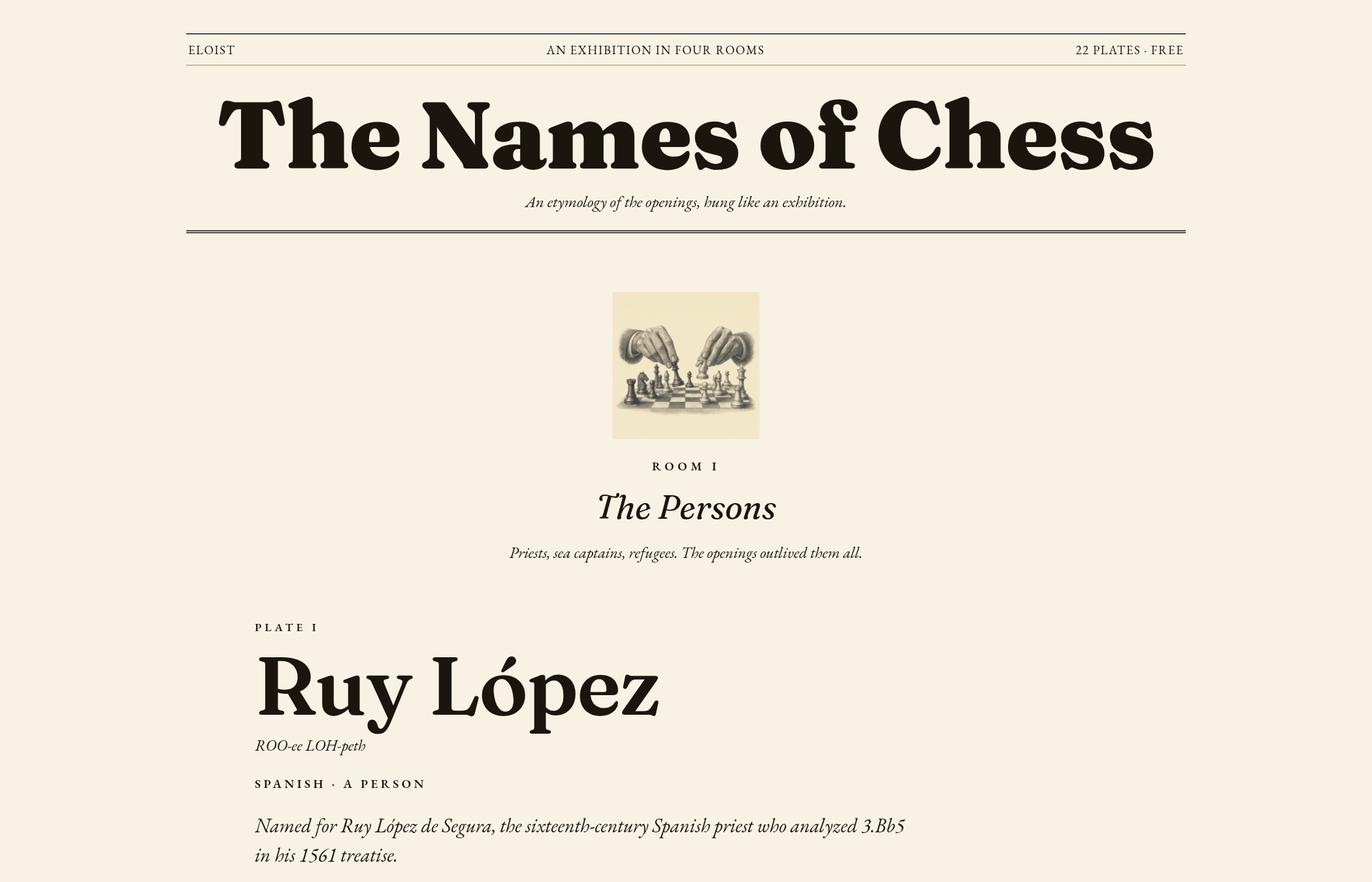
Why is it called the Fried Liver Attack? Who was Ruy López? An etymology of the openings, hung like an exhibition — every plate linked to its opening.
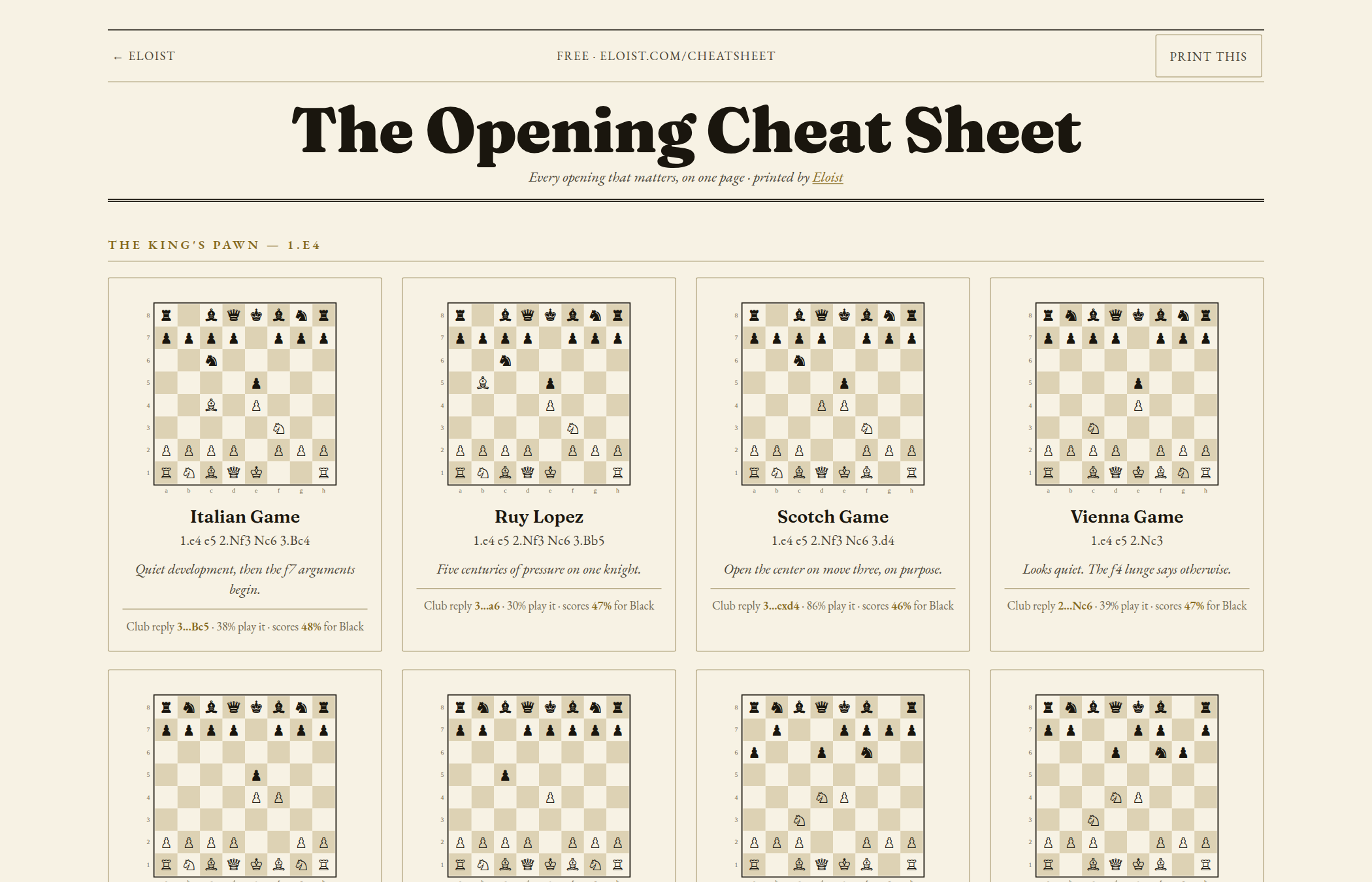
Walk the rooms →The one-page opening reference, set like print. First moves, main ideas, the trap to avoid — pin it next to your board.
Open the cheatsheet →You then, versus you now. Eloist studies your full history overnight and reports what actually changed — pace, openings, the habits you did or didn't shake.
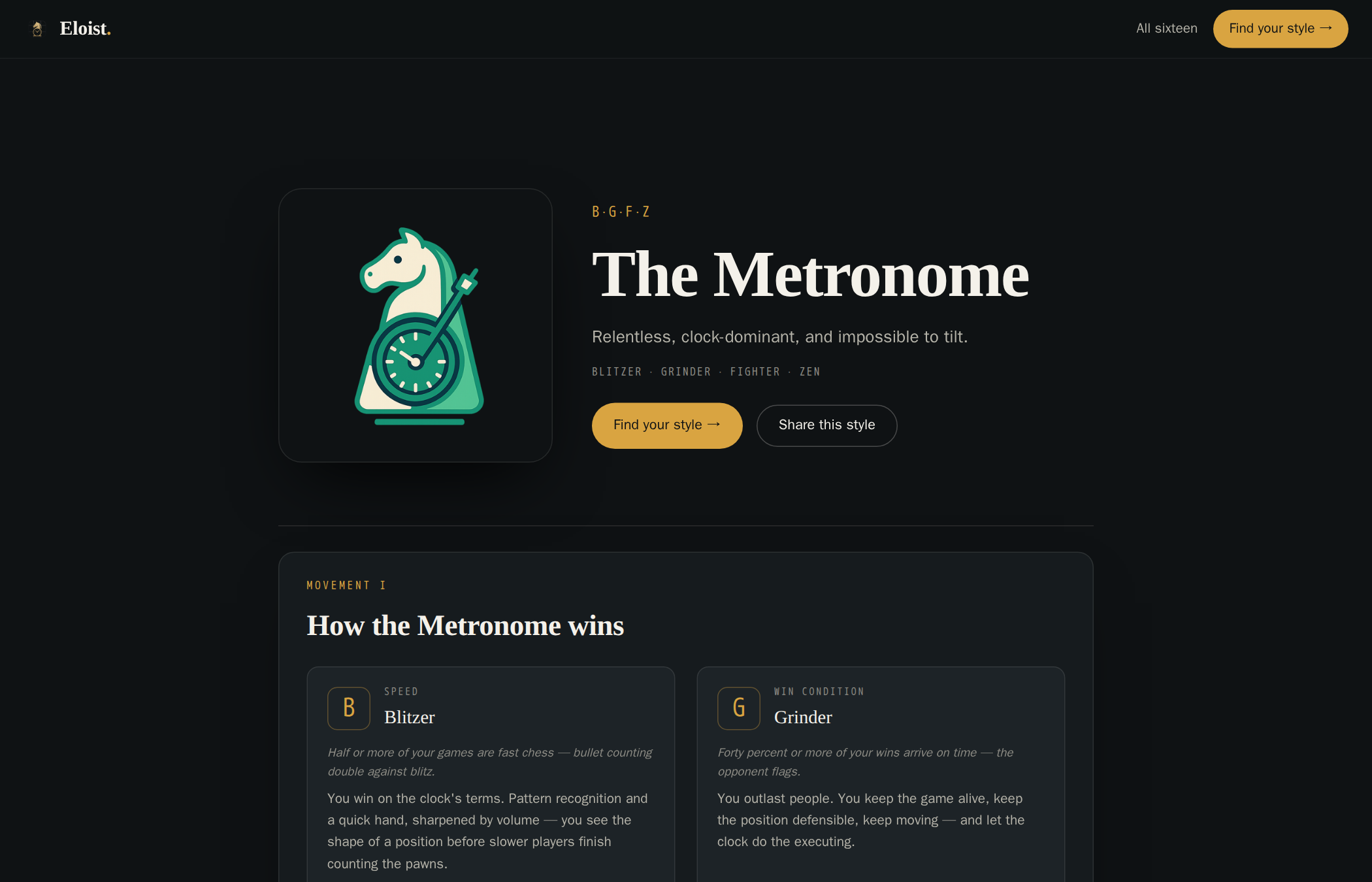
Sign in to get it →Every style profile now has its own page — a field manual in three movements: how they win, how to beat them, how to not get beaten.
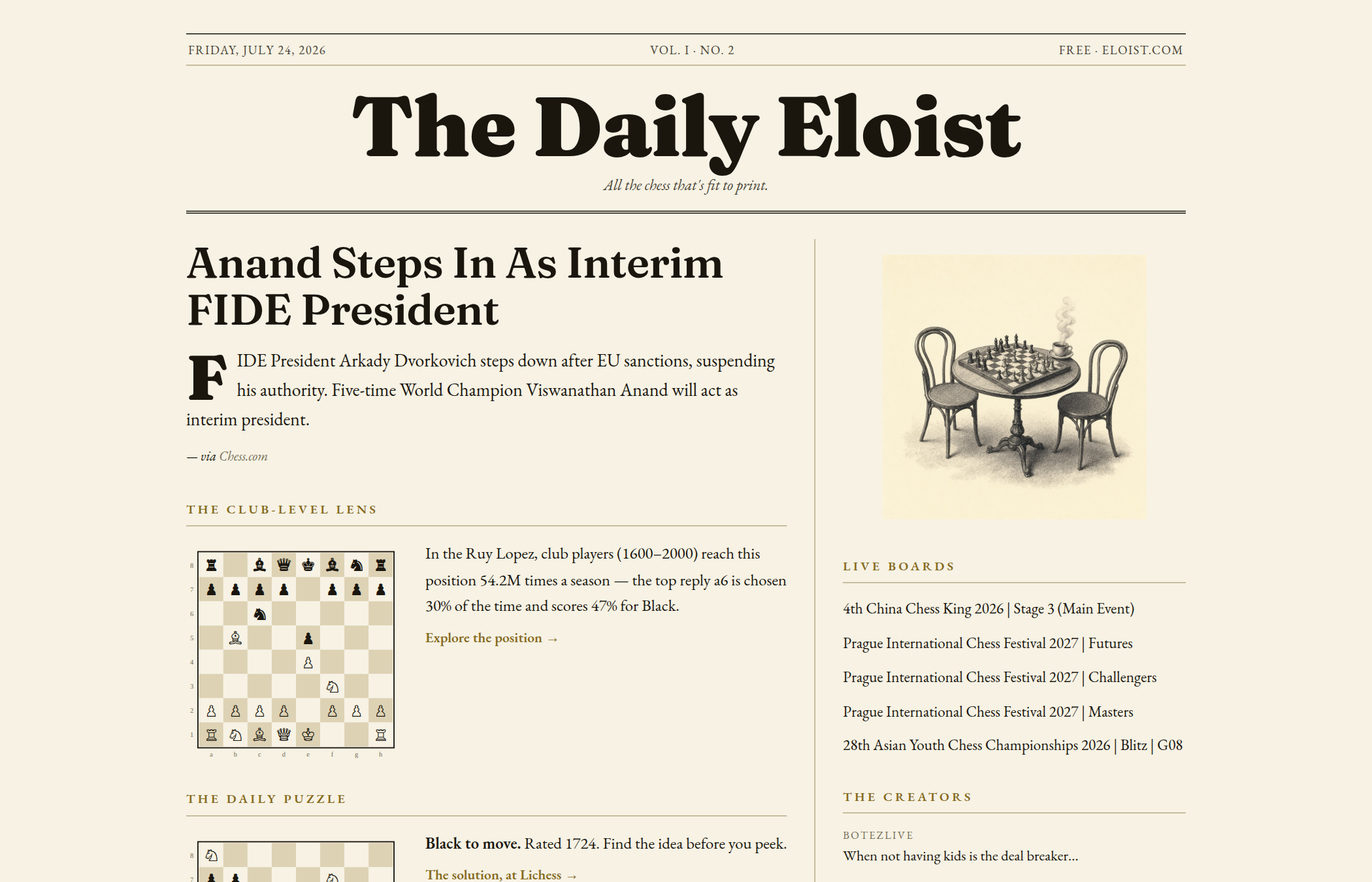
Find yours →A chess broadsheet, printed every morning: Game of the Day, Today in Chess History, the Daily Puzzle, and the wires. Subscribe and it lands in your inbox with the coffee.
Read today's paper →Two new toys. Paste a username and get roasted with receipts. Paste a game and hear it called the way it deserved to be called.
Get roasted →Your openings, drilled as a deck — scheduled by what you're about to forget, graded by whether your move actually holds.
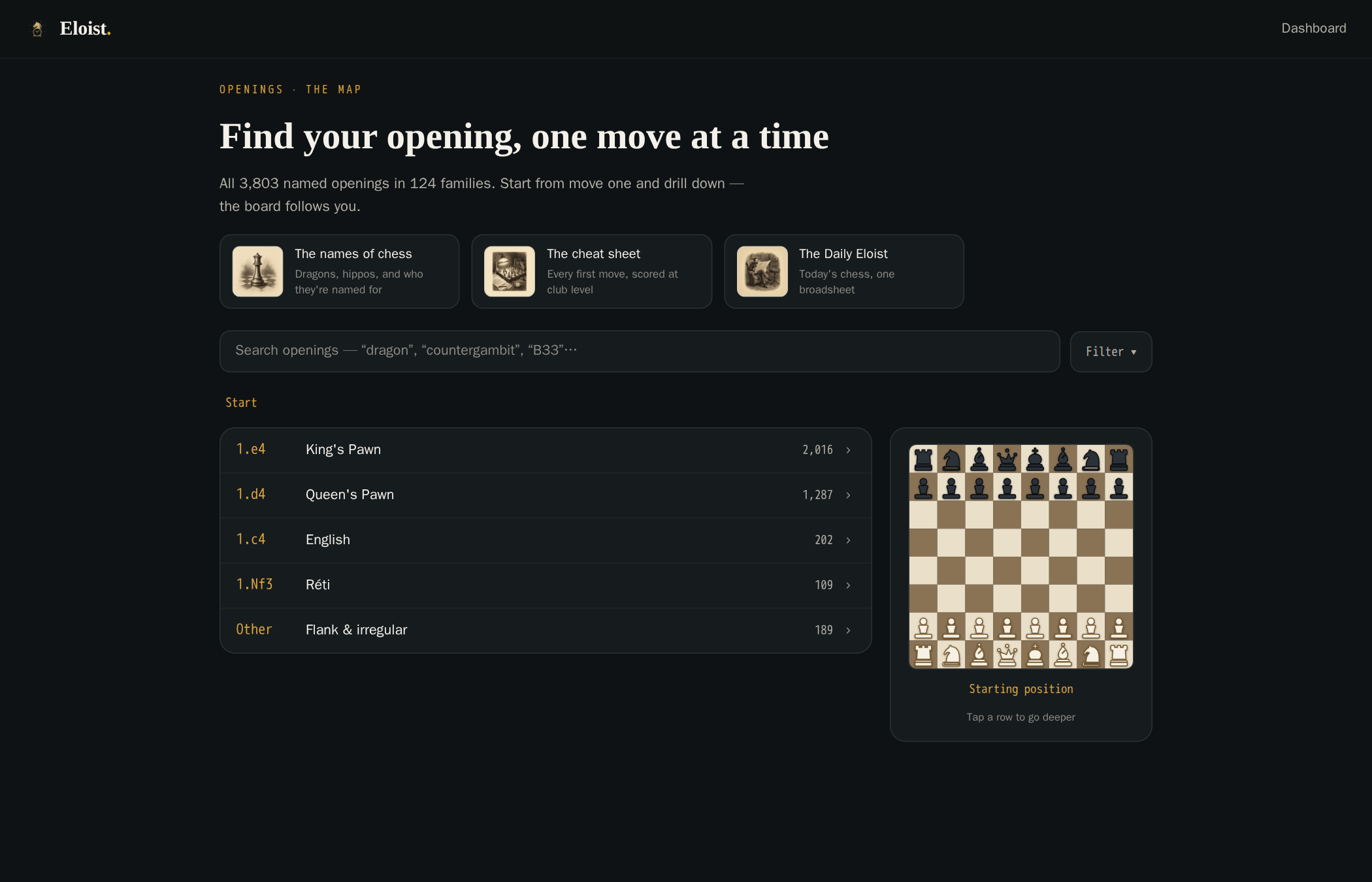
Start your reps →Every page in the openings database now carries a live panel: the continuations people actually play, real games, and win–draw–loss at club level.
Explore the openings →Sixteen tools that let your AI assistant read any Chess.com player's real games — style, leaks, repertoire, missed tactics. Free, no key.
Add it to your assistant →Inside any reviewed game: see the best move, retry the position yourself, and trace the mistake back to the opening it came from.
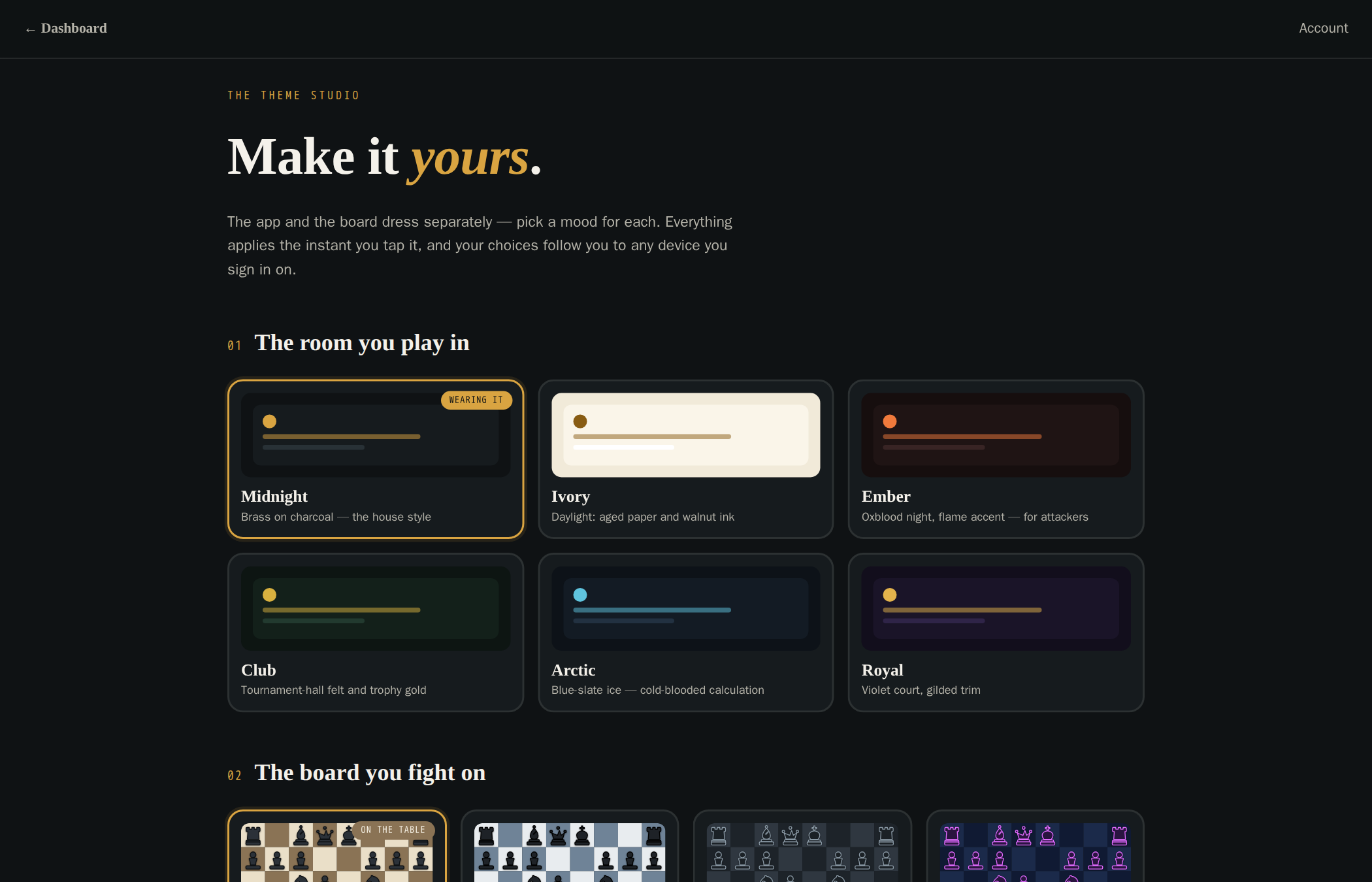
Full app skins and board themes, remembered per player — including two hand-made art boards, Heirloom and Nebula.
Open the studio →How much of your chess does the clock decide? Now a number, with the games to prove it.
Run yours →Written for club players, not databases: the plan, the trap, and what to do when your opponent refuses to cooperate.
Read the guides →Bottom tabs, a thumb-first dashboard, boards that behave in one hand. Add Eloist to your home screen and it feels native.
A proper vector piece set on every board — themable, crisp at any size, correct in both colors on every screen.
New name, new home: eloist.com. The style radar and clickable profile details arrived with it.
eloist.com →Your history told in chapters, your sessions recapped with their fatigue curve, an interactive game viewer, and a database of openings to get lost in.
The AI coach moves into the dashboard, and Pro arrives: unlimited history, unlimited engine, a coach that tells you the truth.
What Pro unlocks →Eloist opens its doors: connect your Chess.com account and find out what's actually costing you rating. Free.
Start here →