Getting winning is not the same as staying winning
For the typical club player, a quarter of clearly won positions end level or worse. We measured 274,626 of them to find out why the win leaks.
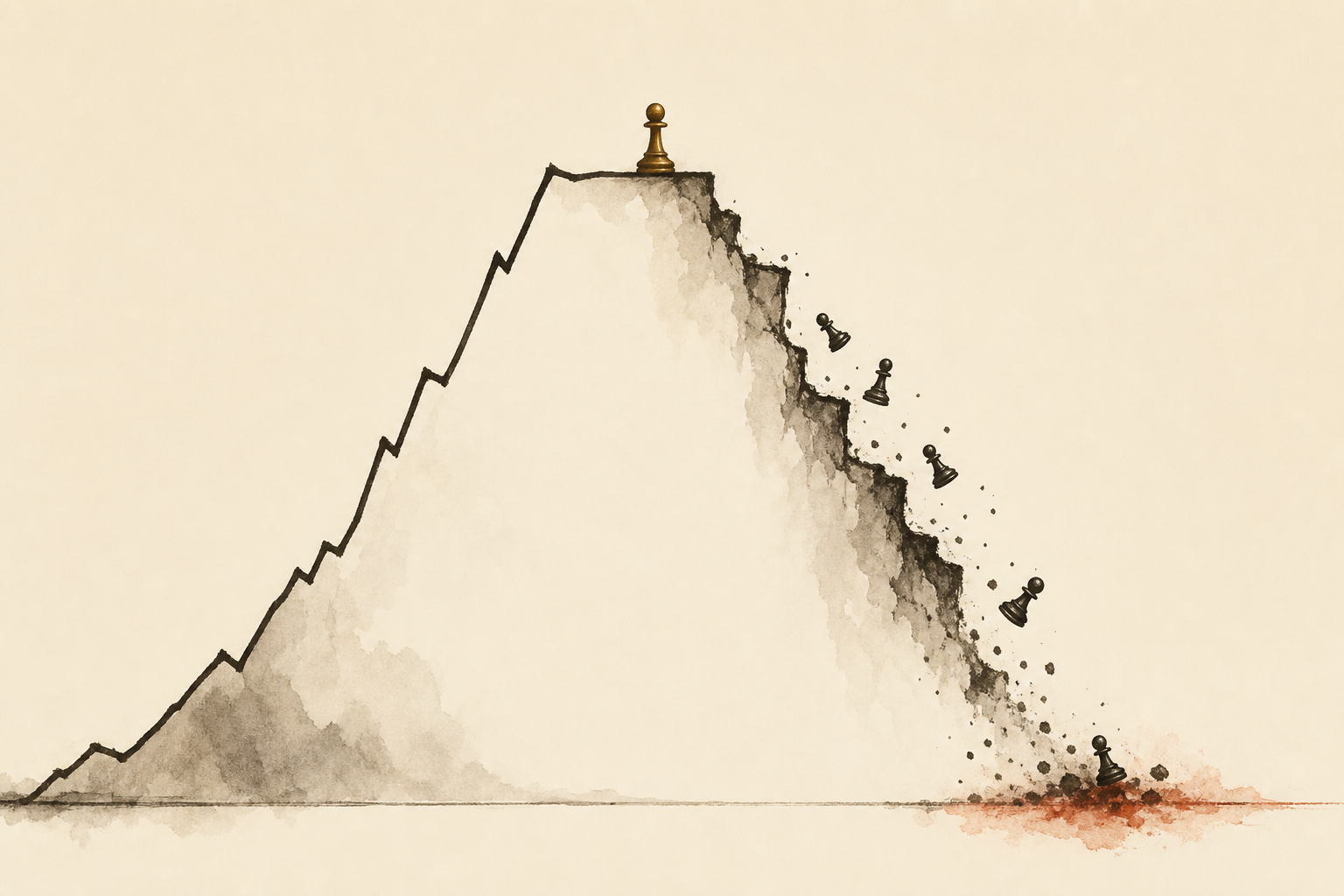
Take every analysed game in which a player built an advantage of at least three pawns. A winning position by any honest definition, measured from move five onward so opening chaos does not count. Across 228 club players and 274,626 such games, the typical player’s share that finished back at level or worse: 24.7%. One won game in four, given back.
The middle half of players sits between 20% and 30%, so this is not a few blunder-prone accounts dragging an average. It is a habit nearly everyone has. Pooling every game instead of taking the per-player median gives 25.1%, almost the same number, which is itself the evidence that no single prolific player is carrying the finding.
Why wins leak
The companion measurement explains most of it: blunders come from better positions. For the typical player, 56.8% of worst moves are played from a position they were already winning, against 13.2% from positions they were losing. And it holds for every single player in the corpus. Your worst move is usually played by the version of you that is ahead, relaxed and moving faster, not by the one scrambling in a lost position.
The practical shape of the fix is unglamorous: when the engine bar says you are up a piece, that is precisely the moment your move-time should go up, not down. Winning from there takes two dozen ordinary moves that refuse to give anything back, and no brilliancy at all.
Find out your own giveback rate. First report free →